
More about Spire
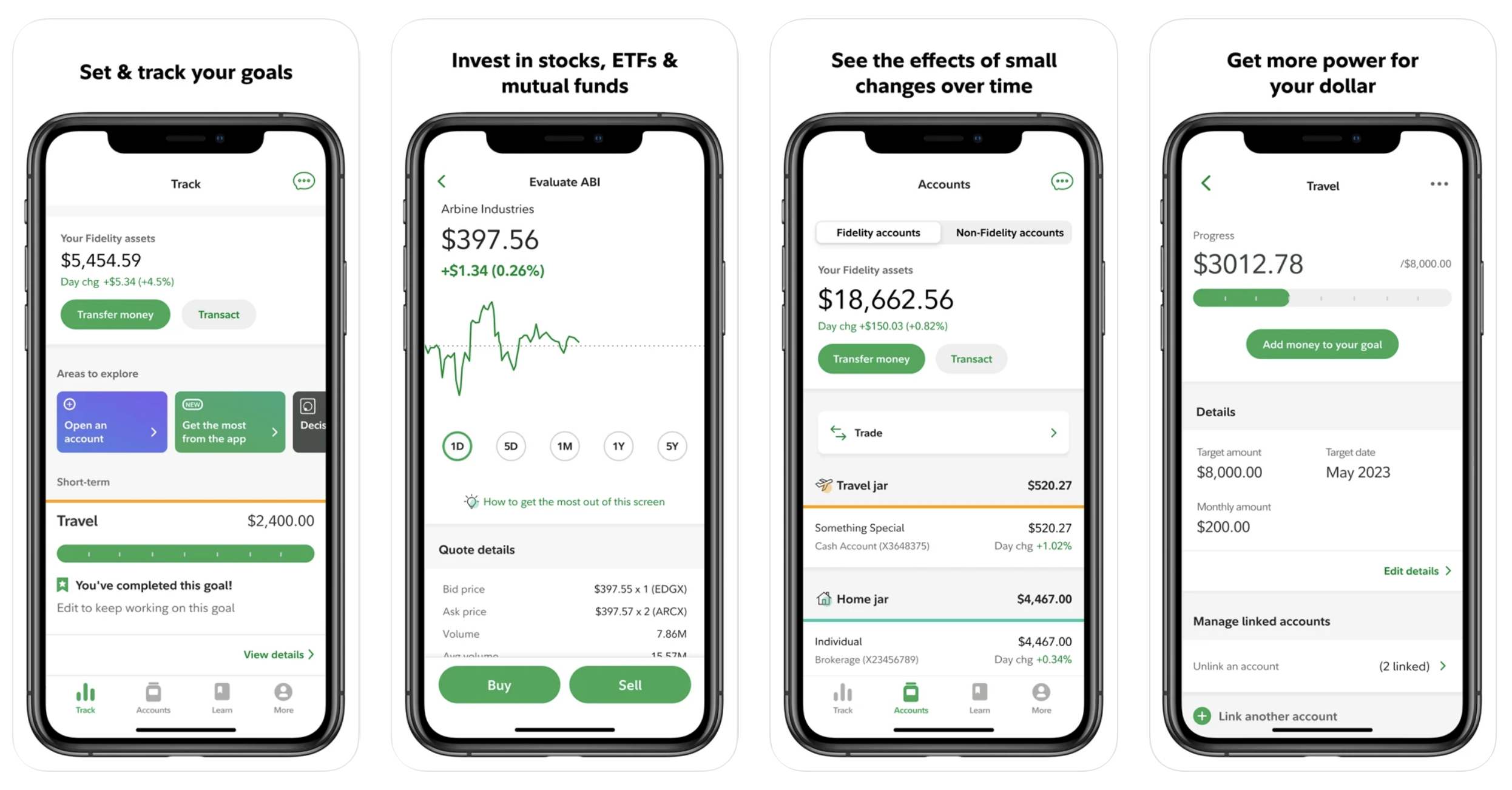
Fidelity Spire is a goals-based financial planning app designed for a younger generation seeking guidance and tools to prioritize their financial needs. Featured in the App Store's "Apps We Love Right Now" in 2020, the app helps users prioritize goals, track debt payoff, compare goal trade-offs, and access customized articles based on their selected priorities. It launched nationally in July 2020 for iOS and Android. I led UX design from launch through mid-2022.
The product
The experience was built on Jobs to Be Done insights, focus group sessions with the target audience, and UX usability studies. The goal was to test the app in market and iterate based on user feedback. It went through several design iterations — internal employee feedback during beta solidified the initial direction, followed by an MME2 release to a segment of internal customers in April 2020, before the national launch in July 2020.
My role
I joined as Senior UX Designer at the start of the product's build and grew into the Principal role at launch. Over two years I owned the core consumer experience, from the pre-login journey through account opening, accounts, and the guest membership pathway, working across engineering, compliance, analytics, and third-party vendors to get things shipped in a highly regulated environment.
As the team evolved, so did my scope. I became the consistent thread across the product, maintaining continuity as designers joined and left, building and governing the component library and file structure standards, and defining the iconography and illustration system that shaped Spire's visual identity. By the time I left, I had touched nearly every corner of the app.
The User
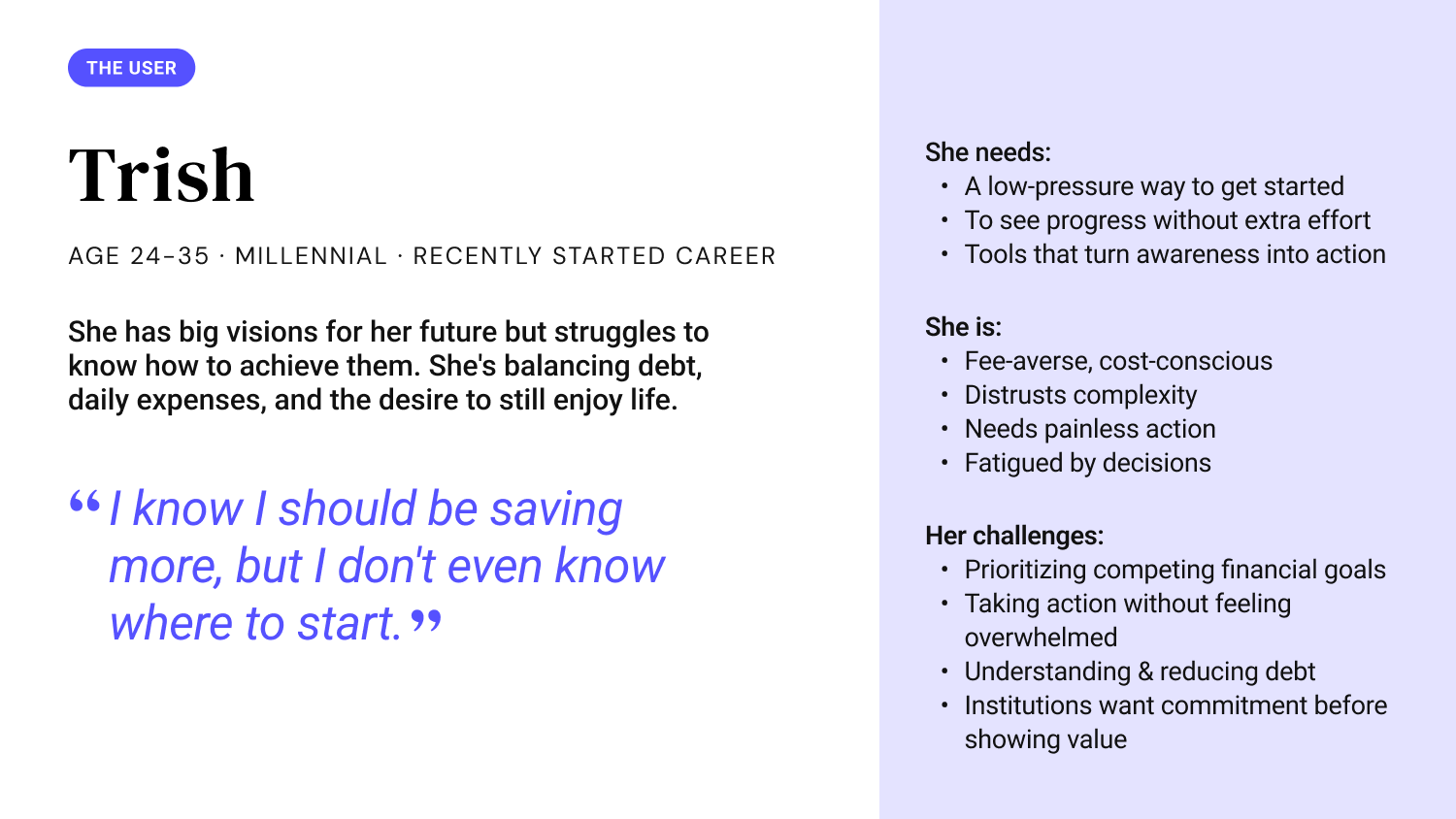
Every product decision on Spire ran through one question: does this work for Trish? Trish is a millennial in her mid-to-late twenties, recently into her career, balancing debt with the desire to start making progress. She has big financial goals but no clear path to achieve them. She knows she should be saving more. She just doesn't know where to start.
She's fee-averse and cost-conscious. She distrusts complexity. She's risk-averse from watching the 2008 financial crisis as a teenager and doesn't believe she has enough money to be considered an "investor." She wants to act — she just needs a system that doesn't ask too much of her.
I know I should be saving more, but I don't even know where to start.
Trish's challenges became the design brief: help her prioritize competing goals, make action feel manageable, and never ask for commitment before showing value. That last one became the direct catalyst for Guest Membership.
She wasn't a hypothesis. The onboarding data confirmed her. Home and Emergency Fund led short-term goal selections. Student debt ranked #1 among debt types at 27.8%. These aren't investment goals — they're near-term stability goals. The product had to meet her there first.
27.8% Student debt — #1 debt goal selected by prospects at onboarding
21.8% Selected Home as their top short-term goal
25.1% Selected Retirement as their top long-term goal
Case studies
Two features from Spire are documented in detail below. Both were designed around Trish's core tension: wanting to make financial progress without being asked to commit before she was ready.
Spire Guest Membership →
Student Debt Roundup →
© 2026, All Rights Reserved